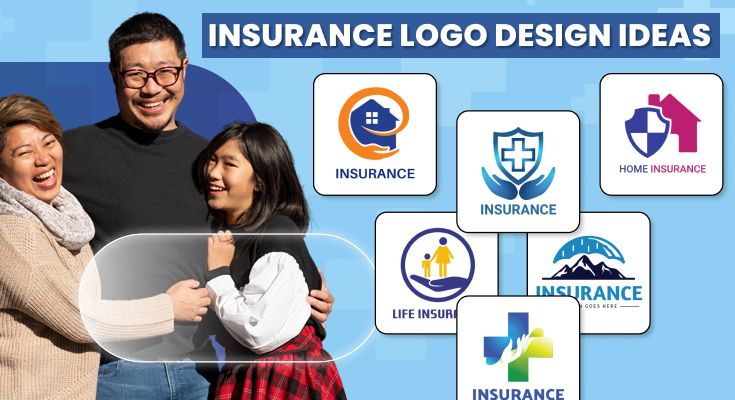
Discover insurance logo design ideas that define your brand’s professional identity. Insurance logos communicate trust, security, and reliability through thoughtful visual design. These symbols represent your company’s commitment to protecting clients and building lasting relationships. By examining modern examples and sample images, you’ll uncover design patterns that resonate with your target audience and strengthen brand recognition in a competitive market.
Unlock your brand’s potential by browsing diverse insurance logo examples that enhance visibility and credibility. Whether you’re starting fresh or refreshing your identity, leverage a professional logo maker to transform inspiring templates into your distinctive visual signature that truly reflects your company values.














FAQs About Insurance Logo Designs
First, begin by researching your brand identity, target audience, and competitor insurance logos. Next, sketch rough concepts representing trust, security, and protection. Then, explore insurance logo templates available on logo maker platforms for inspiration.
Additionally, gather sample images of successful insurance logos to understand current design trends. Moreover, consider what symbols best represent your specific insurance niche: health, property, or life insurance. Therefore, your insurance logo designs should clearly communicate your specialty. Furthermore, ensure your chosen color palette reflects professionalism and trustworthiness.
Finally, export the other badge logo templates in multiple formats for various applications. Besides, create brand guidelines documenting logo usage rules. Also, maintain consistency across all your marketing materials. In addition, prepare both color and grayscale versions. Ultimately, your insurance logo becomes your brand’s visual foundation for years ahead.
Before beginning, define your brand’s core values and mission clearly. Specifically, determine what emotions you want your insurance logo to evoke. Also, identify your target demographic’s preferences and expectations.
Moreover, think about how your insurance logo ideas will work across platforms. In addition, consider which symbols represent your insurance specialization best. Next, decide whether you’ll use a professional designer or a logo maker. Furthermore, gather inspiration from quality insurance logo examples and templates.
Also, consider future scalability and potential rebranding needs. Besides, think about trademark availability for your chosen insurance logo. Furthermore, prepare a mood board showing your preferred styles. Additionally, involve key stakeholders in initial planning discussions. Ultimately, thorough preparation ensures your insurance logo design ideas align perfectly with brand objectives.
Medical logo designs significantly influence insurance logos, especially in the health insurance sector. Therefore, many insurance logo ideas incorporate medical symbols like crosses, hearts, or healthcare imagery. Additionally, medical logo templates often emphasize trust, compassion, and professional credibility qualities essential in insurance branding.
Furthermore, medical logo designs demonstrate how to communicate complex concepts simply and visually. In addition, health insurance companies often adopt similar design principles found in medical logo templates.
Also, the balance between professional appearance and approachable design in medical logos influences insurance logo makers like Logowiz. Besides, many insurance logo examples borrow symbolic elements from medical design traditions. Therefore, understanding medical logo design approaches enhances your insurance logos significantly.
Using a professional logo maker platform makes customization incredibly simple and straightforward. First, select your preferred insurance logo template from the available options. Next, click to edit text, colors, and design elements directly. Then, experiment with different fonts matching your brand personality. Also, adjust the sizes and positions of symbols until satisfied.
Furthermore, most logo makers offer drag-and-drop functionality requiring zero design experience. Additionally, you can undo changes easily during the creative process. Therefore, customization happens remarkably fast using modern insurance logo makers.
Furthermore, professional platforms provide house logo templates to suggest as you work. Also, compare multiple versions side-by-side before deciding. Moreover, export your customized insurance logo designs in any format needed. Besides, most services offer unlimited revisions and variations.
Many companies overload their insurance logos with excessive details and complexity. Specifically, complicated insurance logo designs blur together at small sizes. Additionally, outdated fonts make insurance logo ideas appear unprofessional quickly. Furthermore, poor color contrast reduces readability across different backgrounds.
Also, neglecting to test insurance logos across platforms creates reproduction problems. Besides, ignoring trademark research leads to expensive legal complications. Additionally, copying a competitor’s insurance logo too closely lacks originality. Furthermore, using trendy styles risks your logo looking dated soon. Consequently,
Furthermore, inadequate white space makes insurance logos appear cluttered visually. In addition, inconsistent scaling causes sizing issues in applications. Also, selecting inappropriate colors undermines professionalism and trust. Moreover, failing to gather feedback means missing improvement opportunities. Besides, rushing the design process compromises quality significantly.
Modern insurance logos embrace minimalism and geometric simplicity. Therefore, clean lines and negative space dominate contemporary insurance logo ideas. Additionally, bold typography replaces ornate fonts in current insurance logo designs. Moreover, sophisticated color palettes communicate professionalism and trust effectively.
Besides, responsive design principles influence how insurance logo images function across devices. Also, sustainable branding considerations increasingly shape insurance logo design ideas. In addition, flat design aesthetics replace three-dimensional elements consistently.
Also, micro-animations and interactive elements enhance digital insurance logo experiences; you can take inspiration from vision logo templates for this. Besides, inclusive design principles ensure insurance logos appeal broadly. Furthermore, bold color combinations break traditional insurance design conventions innovatively. Additionally, personalization features allow custom insurance logo templates for different segments.
Testing your insurance logo across multiple devices ensures consistent quality everywhere. Therefore, preview your insurance logo designs on smartphones, tablets, and desktops immediately. Additionally, check how insurance logo ideas appear at various sizes and resolutions.
Besides, create responsive versions of your insurance logo design for different platforms. Also, ensure your insurance logo maintains clarity when scaled down significantly. Furthermore, use vector formats like SVG for perfect scaling without quality loss. Moreover, test color reproduction across smartphones, monitors, and printed materials.
Also, check how your insurance logo designs appear on email signatures and social media profiles. Furthermore, test viewing angles and distances to verify impact and visibility. Additionally, gather feedback from users testing on their actual devices and platforms. Moreover, use browser developer tools to simulate various screen sizes easily.